33 source-led research fellowship profiles. Academic, translational and outcomes-research fellowships in plastic and reconstructive surgery departments worldwide.
What this pathway means
Research fellowship
Academic appointments centred on laboratory, translational, clinical-outcomes or education research. Clinical exposure, where available, is usually secondary or observational.
Often suits
Surgeons building an academic career
Applicants waiting for registration or a clinical post
Evidence filters describe the available information. Published criteria do not guarantee eligibility, funding or a vacancy; missing information does not mean you are ineligible.
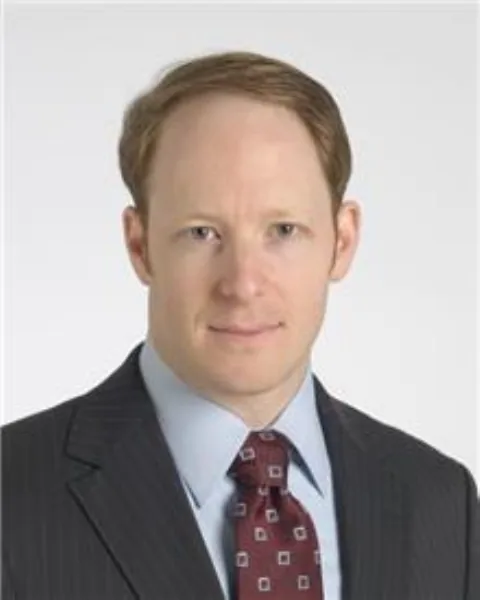
An InSITE clinical and translational research fellowship applying AI, computer vision, extended reality and robotics to lymphatic, breast and complex reconstruction. This named technological track is distinct from the Bassiri Gharb craniofacial research listing.
Research fellowship application contact; InSITE mentorGraham Schwarz, MD
A year-long research post leading the research group of the Boston Lymphatic Center, whose work covers lymphatic anatomy, treatment and prevention of lymphedema, and lymphatic imaging. Duties include running databases and animal experiments and preparing manuscripts and abstracts.
A research post in the Boston Children's Lymphedema Program, with basic science and clinical research opportunities. The programme takes one lymphedema research fellow a year and is aimed at trainees heading for academic plastic surgery.
A 12-month research post for recent medical graduates, students, residents or fellows in an oculoplastics, orbit and ocular oncology research group. Research areas named include ocular oncology, artificial intelligence, patient-reported outcomes and oculoplastic and orbital oncology; the goal is five peer-reviewed manuscripts.
Research fellowship supervisorKelsey A. Roelofs, MD
Jichi’s research fellowship requires at least six months and covers stem cell biology, regenerative biotechnology, hair research, radiation damage, keloids, burns and wound healing. The JSPRS factsheet distinguishes this placement from its mainly observational clinical track and separate four-year PhD course. Research participation does not itself grant patient-care privileges.
A funded one-year orthopaedic research fellowship in hand and upper extremity topics including upper limb trauma, arthroplasty and peripheral compressive neuropathy, with clinical shadowing and a didactic curriculum alongside the orthopaedic residency.
Royal College of Surgeons of England and Blond McIndoe Research Foundation
Host UK institution of the fellow (RCS England based in London, England) · United Kingdom
A one-year RCS England joint research fellowship funded with the Blond McIndoe Research Foundation for research into tissue repair, regeneration and scar reduction.
A funded one- to two-year research opportunity in the ASCFS craniofacial research directory, mentored by Joseph Lopez. The directory gives a mentor and contact, without a project-specific recruitment cycle or clinical privileges.
Research mentor (ASCFS listing)Joseph Lopez, MD, MBA
A protected research-year scholarship under James Bradley, focused on craniofacial surgery and transgender medicine, with research writing, IRB work and surgical observation. The recruitment advert excludes international students.
An ASCFS-listed research track with Bahar Bassiri Gharb. Funding differs between its one- and two-year options; no operative participation is established by this research-directory entry.
Research mentor (ASCFS listing)Bahar Bassiri Gharb, MD
USC’s CHLA-based research fellowship covers craniofacial, microsurgical, hand, burn and paediatric plastic surgery projects, including prospective early-cleft-repair studies. Medical-student applicants must be in a US MD or DO programme; general surgery residents may also apply.
Director of Research; fellowship leadJeffrey Hammoudeh
An unfunded protected research placement in Stanford’s Hagey Laboratory, listed by ASCFS with Michael Longaker and Derrick Wan. Grant-application support is listed, but is not a promise of an award or salary.
A one- to two-year unfunded research opportunity listed by ASCFS with Jessica Ching. The source gives mentor and administrative contact details; current project assignments, qualifications and intake dates require host confirmation.
ASCFS lists two distinct one-year research tracks at UT Southwestern: one with Paymon Sanati-Mehrizy and another with James Seaward and Alex Kane. This single overview retains the two-track distinction without manufacturing separate application cycles.
Research mentor — track 1Paymon Sanati-Mehrizy, MD
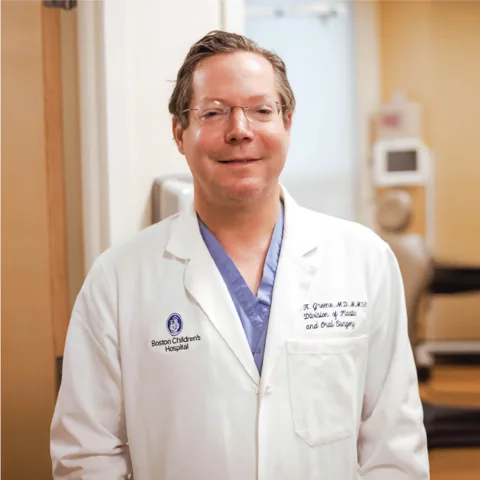
A funded one- to three-year research pathway focused on vascular anomalies, under Arin Greene. The ASCFS entry identifies basic and translational research rather than an operative fellowship.
Research mentor (ASCFS listing)Arin K. Greene, MD, MMSc
A one-year research opportunity in the ASCFS craniofacial research directory, mentored by Erik Wolfswinkel. Funding is explicitly dependent on application year, so a funded place is not assumed.
Research mentor (ASCFS listing)Erik Wolfswinkel, MD
A protected research fellowship with a craniomaxillofacial focus, combining clinical and basic-science studies, protocol development and grant-writing mentorship. ASCFS names dedicated mentors and gives a 2027 start and application deadline.
Dedicated research mentorMichael Golinko, MD, FACS, FAAP
A clinical research fellowship with a translational focus on cleft and craniofacial outcomes. ASCFS also lists potential breast, hand and microsurgery projects and clinical exposure with CHOA and Emory faculty, without establishing operative privileges.
A medical-student research fellowship covering craniofacial surgery, diabetic limb salvage, microsurgery, breast reconstruction and gender-affirming surgery. Research responsibilities include study design, analysis, manuscripts and academic presentations.
A broad reconstructive-surgery research pathway with a cleft and craniofacial component comprising approximately 10–20% of the experience. ASCFS lists Amy S. Xue and Michael Klebuc; only Klebuc is added here because the reviewed materials do not yet establish which Amy Xue is meant.
A research year studying cleft and craniofacial outcomes, including quality of life and functional outcomes. Fellows work with Amanda Gosman and Benjamin Massenburg on study design, analysis, writing and presentations in a multidisciplinary craniofacial team.
A one-year funded research internship in the ASCFS craniofacial research directory. The current listing requests a cover letter, CV and two references and names John Girotto as its paediatric plastic-surgery contact.
Research mentor; Section Chief, Pediatric Plastic SurgeryJohn A. Girotto
A two-year research programme spanning craniofacial biology, tissue scaffolds, transplantation, wound healing, breast reconstruction, hand surgery and microsurgery. It has a different duration and director from the one-year Flores track listed by ASCFS.
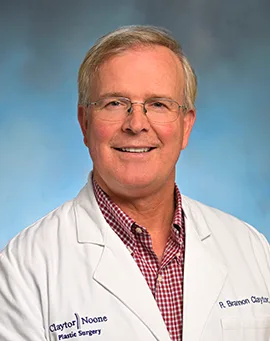
A funded research year under Brannon Claytor, studying aesthetic surgery, wound healing, regenerative medicine, breast reconstruction and face and neck lifting. The advert includes operating-room observation alongside research, without promising operative privileges.
 Upcoming cycle

 Research fellowship application contact; InSITE mentorGraham Schwarz, MD